
Have you ever met someone new, only to find yourself living through the same old relationship story?
A different face. A different name. A different beginning. And yet, after some time, you find yourself experiencing the same disappointment, the same insecurity, the same fear of losing someone. You ask yourself, “Why does this keep happening to me? Why do I keep attracting the same kind of partner?”
Look at this question through the spiritual understanding of karma. A relationship does not begin only with the first conversation, the first meeting, or the first message. In this understanding, you arrive carrying something. The other person arrives carrying something. There are unfinished impressions, attachments, desires and karmic connections that bring your paths together.
Neem Karoli Baba beautifully said, “We meet only those people with whom our meeting is predestined. Duration of association with each person is also preordained. One should not grieve if one is separated or if the association doesn’t last long.”
We meet only those people with whom our meeting is predestined. You may think that it was an accidental meeting. You were travelling. Someone introduced you. You received a message. You happened to be in the same place at the same time. But through the lens of karma, that meeting belongs to a journey much larger than the circumstances you can see.
The spiritual understanding is that a person who becomes deeply connected with you may share an unfinished connection from another lifetime. Something brings you together, something unfolds between you, and the association continues for its appointed duration. We cannot examine another person’s past lives and declare exactly what they owe us. But we can use this teaching to understand our attachments and become more conscious of what we create today.
Karmic baggage does not mean only suffering. Someone may come into your life to support you. Someone may stand beside you when the entire world seems to have turned away. Someone may help you discover a strength you never knew you possessed. Love, kindness, care and gratitude can also be part of a karmic connection. Every meaningful meeting is not a punishment.
But sometimes a relationship touches a wound so deeply that you lose yourself in it. Your peace begins to depend on a message. Your worth begins to depend on someone’s approval. Your entire day becomes beautiful or miserable depending on how that person behaves. Slowly, without realising it, you have handed over the keys to your inner life.
Then the relationship changes. The person becomes distant. Or the association ends. And you feel as though your whole existence has collapsed. You say, “I cannot live without this person.” But before this person came, you were living. You were breathing. There was a life within you. Where has that life gone? It has not disappeared. Your attention has become so completely absorbed in someone else that you have forgotten the source within yourself.
In my spiritual interpretation, Rahu, Venus, Mars and Moon periods can bring different forms of attachment to the foreground. When the birth chart already carries difficult relationship patterns, these mahadashas may become periods in which those patterns repeat. But the name of a mahadasha alone does not decide whether someone will be faithful, restless or spiritually aware. We have to understand the whole chart and the choices the person is making.
Rahu brings us to bhram—illusion. During a challenging Rahu mahadasha, you may become fascinated by the image you have created of someone. You see what you want to see. You overlook contradictions because the attraction feels extraordinary. You tell yourself, “This connection must be destiny.” But have you understood the person, or have you fallen in love with your own expectation? When this tendency remains unconscious, one fascination may be followed by another, and the same disappointment can return with a different face.
Venus brings us to bhog—the enjoyment of pleasure. There is nothing inherently wrong with pleasure, affection or physical intimacy. But when pleasure becomes the only basis of choosing a partner, discernment can become clouded. In a difficult Venus mahadasha, someone may keep chasing beauty, romance, attention or sensual satisfaction while overlooking honesty, compatibility and shared values. Every new beginning feels promising because it offers a fresh experience of pleasure. Yet the deeper need remains unexamined. Venus can also express love, devotion and harmony; we must understand how Venus functions in that particular chart.
Mars brings passion, sexual desire and the urgency to act. When Mars is operating in a difficult way, attraction may move faster than understanding. You feel the chemistry and immediately want to pursue the person. But have you taken time to understand their values, their emotional maturity or their spiritual outlook? If you choose only through the heat of passion, you may overlook whether the relationship can support a conscious life together. The difficulty is not desire itself. It is allowing desire to make every decision before awareness has had a chance to speak.
The Moon brings us to the mind, emotional security and the need to feel connected. In a difficult Moon mahadasha, emotional wavering may become an important theme. A person may feel deeply attached today and uncertain tomorrow. They may seek reassurance repeatedly, or begin looking elsewhere whenever the initial excitement settles. This can contribute to difficulty sustaining a relationship when the wider chart supports that pattern. But Moon mahadasha does not automatically mean someone cannot remain committed. A well-supported Moon can express tenderness, care and a deep capacity for emotional connection.
Similarly, when interpreting a Moon afflicted by Rahu or Mars, I would examine how the person handles emotional intensity. With Rahu influencing the Moon, the themes may include fascination, confusion, obsessive thinking or difficulty separating longing from reality. With Mars influencing the Moon, the themes may include emotional heat, impatience, anger or acting quickly on desire. These are symbolic astrological interpretations, not proof of a person’s behaviour. One combination cannot tell us how many relationships someone will have, whether they will be unfaithful, or how spiritually conscious they are.
If someone repeatedly seeks sexual relationships to escape loneliness, to feel wanted or to avoid an unresolved hurt, the pattern may leave them emotionally exhausted. That is what I mean here by feeling drained: repeated anxiety, conflict, disappointment and attention consumed by the same unfinished longing. Sexual intimacy itself does not make a person less spiritual. The question is whether their choices arise from honesty and awareness, or from a compulsion they have not yet understood.
This is why, in KPSM Triveni, I would not stop after hearing the name of the mahadasha. I would examine the relationship cusp and its star-lord and sub-lord connections, the relevant house significations, the condition of the Moon and Venus, the mahadasha and antardasha, and the transits activating the pattern. The interpretation has to come from the combined picture. We should never frighten someone by telling them that an entire planetary period condemns them to failed relationships.
The spiritual question remains the same through every dasha: can you see what is moving you? Under Rahu, can you recognise the illusion? Under Venus, can you enjoy affection without becoming blinded by pleasure? Under Mars, can you allow passion to coexist with patience? Under the Moon, can you observe a changing feeling without immediately changing your commitment? You do not have to wait for a mahadasha to end before you begin practising awareness. The practice begins in the very moment you notice the pattern.
Some people believe that becoming spiritual means difficult relationships will never happen again. They think, “I meditate. I pray. I chant. So why did this person come into my life and hurt me?” But within the teaching of karma, spiritual awareness does not necessarily cancel every encounter that remains to unfold. Whether you are deeply aware or living unconsciously, the people connected with your destiny may still enter your life. What changes is how you meet them, how you understand the experience, and what you create through your response.
This is where the real spiritual work begins. Someone comes into your life carrying anger. Will you add your anger to it? Someone speaks from hatred. Will you allow their hatred to become your hatred? Someone acts without awareness. Will you abandon your own awareness because of what they have done?
There is a spiritual story about Gautama Buddha that expresses this beautifully.
Once it happened, Gautama Buddha was seated beneath a tree and Ananda was also present. A man who was against the Buddha came and started insulting him.
He abused Buddha and said many ugly things to him. Buddha’s disciple, Ananda, was not able to bear this anymore. Ananda and Gautama Buddha were from the royal family; they were Kshatriya, fighters. But because Gautama Buddha was present, Ananda controlled himself; otherwise, he would have killed him then and there.
The man continued to abuse Buddha. Buddha simply listened attentively and then said, “Thank you.”
The man was puzzled. He said to Buddha, “Are you mad? Have you gone mad? I am insulting you, offending you and you simply say ‘Thank you’?”
Buddha said, “Yes because I was waiting for you. I had insulted you in the past and I was waiting — until you came I would not be totally free. Now you are the last man; my accounts are closed. Thank you for coming. You might have waited, you might not have come in this life, and then I would have had to wait for you. And I don’t say anything anymore, because enough is enough. I don’t want to create another chain.”
The man left with embarrassment. The accounts were closed. When you don’t react, slowly, the accounts are closed. But the big question is: how many are able to do so? Not everybody is Buddha, and not everybody can be a Buddha. To be a Buddha, you need to turn inwards, find yourself, discover yourself—and most importantly, learn to live your whole life in total acceptance.
Buddha does not allow the insult to determine his state of consciousness. The man arrives with anger, but Buddha does not become an extension of that anger. The exchange ends because Buddha does not carry it forward.
Someone hurts us, and immediately we want them to experience the same pain. Someone rejects us, and we begin planning how to make them regret it. Someone leaves, and for years we keep imagining the day they will return and acknowledge our value. Physically, they have gone. But mentally, we are still living with them. We carry them into our mornings, our meals, our prayers and our sleep.
The person may no longer be speaking to you, but your mind is speaking to them every day. You are explaining. Arguing. Defending yourself. Demanding an apology. The outer relationship may have ended, but the inner conversation continues. This is something you can observe directly, without needing to know anything about a previous birth.
This is where understanding becomes so important. In the language of karma, reacting with hatred creates further bondage. In everyday life, you can see how it happens: yesterday’s hurt begins controlling today’s words, today’s decisions and tomorrow’s relationship. You meet someone new, but you approach them through the fear left by someone else. You begin expecting betrayal before trust has even had a chance to grow.
Awareness does not mean that you must tolerate mistreatment. You can say no. You can protect yourself. You can leave a harmful relationship. You can seek help. Karma should never be used to tell someone that they deserve abuse or must remain in danger. A firm boundary can arise from clarity. You can close the door without spending the rest of your life burning with hatred towards the person outside it.
Feeling pain is not a spiritual failure. Tears are not a failure. Grief is not a failure. Even anger can be recognised and understood. The question is what you do with it. Can you feel the anger without immediately turning it into another injury? Can you notice the desire for revenge without allowing it to become the purpose of your life?
That is the difference awareness can make. You begin to pause. You begin to watch. You ask yourself, “What is being touched within me? Why am I so afraid? Why does another person’s distance make me feel that I have no value?” Slowly, the relationship becomes a mirror in which you can see your own attachments.
Perhaps you discover a fear of abandonment. Perhaps you discover that you have spent your whole life trying to earn love by overgiving. Perhaps you keep choosing people who are unavailable because winning their affection feels like proof that you are worthy. These are painful things to recognise. But once something becomes visible, you have an opportunity to respond differently.
Suffering alone does not bring this understanding. A person can suffer for years and become more bitter, more suspicious, more controlling. Awareness begins when you become willing to look within. When you stop making every question about what the other person did and begin asking, “What is happening inside me now? How can I meet it without creating more suffering?”
This is the return to the source of consciousness. Sit quietly. Allow the thoughts to come and go. Notice the memories. Notice the imagined conversations. Notice how the mind keeps trying to change something that has already happened. And slowly, discover that there is an awareness within you that can observe all of this.
The thought appears, “They left me.” You are aware of the thought. A wave of sadness comes. You are aware of the sadness. A memory returns. You are aware of the memory. Through practice, you begin to experience a little space around what once completely overwhelmed you. That space allows you to breathe, to understand and to choose.
Total acceptance begins with acknowledging what is true now. “This happened. This is what I feel. This is where my life stands today.” From that honesty, you can decide what needs to change. Acceptance does not ask you to approve of every action. It allows you to stop exhausting yourself in an endless argument with the fact that the action occurred.
We speak so much about heaven and hell. But look at the states we enter within ourselves. When you are consumed by jealousy, even a beautiful home offers no peace. When you are full of hatred, you carry conflict wherever you go. And when there is love, honesty and stillness within you, even a simple moment can feel complete. In this sense, heaven and hell are experiences unfolding within our own consciousness.
There was one Emperor, and he was the mightiest of all. One day he came to meet Lao Tzu and asked, “What is hell and what is heaven?”
Lao Tzu looked at the Emperor and said, “You son-of-a-bitch! Have you looked at your face in the mirror lately? I have never seen such a dirty-looking fellow before!”
The Emperor was enraged. He had not expected such a thing from such a great saint. He pulled his sword out of its sheath. He was going to cut the head of the Master.
Lao Tzu laughed and said, “Look! This is the gate of hell. You have just entered it. With this anger, with this sword, with this ego, you are opening the doors of hell.”
The Emperor immediately understood. The sword was sharp, the moment was dangerous, but the reaction happened. He realized that the Master had created a drama just to show him what hell is. He had asked a philosophical question, and the Master had given him a living, experiential answer.
The Emperor felt immense gratitude. He fell at the feet of the Master, tears rolling down his eyes. He sheathed the sword, bowed down, and thanked him.
Lao Tzu smiled and said, “And look! This is the gate of heaven. You have just entered it.”
The place was the same. The people were the same. But the Emperor became aware of what was happening within him. A moment earlier, anger was deciding his next action. Then understanding entered, and another response became possible. This is the opportunity that appears in our relationships too. When you feel wounded, can you pause long enough to see what is happening inside you? That pause may prevent one painful moment from becoming years of bitterness.
Every time you nourish revenge, that inner conflict continues. Every time you meet your pain with understanding, something has a chance to soften. This takes practice. It takes courage. It may happen slowly. You do not have to pretend to be Buddha. Begin with the next conversation, the next message, the next moment in which you have a choice.
Neem Karoli Baba’s teaching that the duration of association with each person is preordained can be difficult for an attached mind to receive. We want the people we love to remain according to our wishes. We want every meaningful beginning to become a permanent relationship. But life does not always unfold that way.
Some people walk with you for decades. Some remain for a few years. Some are present only briefly, yet their influence stays with you. The duration of a relationship does not tell you everything about its meaning. Something can have been precious even though it ended. You can be grateful for the love and honest about the pain at the same time.
And if you are grieving, allow yourself time. Do not turn Maharaj ji’s teaching into another reason to criticise yourself. Let it offer perspective: this association mattered, its ending hurts, and still there is life ahead of me. There is something within me that has not ended with this relationship.
As this understanding deepens, aloneness begins to change. Initially, being alone may feel like being unwanted. The quiet room feels empty. You keep checking the phone. You keep searching for someone to fill the silence. But gradually, through meditation, prayer and honest self-observation, you begin to feel at home in your own company.
You enjoy your tea. You notice the morning light. You listen to the birds. You sit quietly without needing the moment to become anything else. Your life begins to feel inhabited again—by your own presence. Aloneness can become peaceful, nourishing, even blissful.
There is an important difference between this aloneness and withdrawing because you are afraid of being hurt. Fear says, “I will never allow anyone near me again.” Awareness allows the heart to remain open while your choices become clearer. You can care for people. You can welcome affection. You can enjoy companionship. But you are less willing to abandon yourself simply to prevent someone from leaving.
For some people, the need for another romantic relationship becomes very small or disappears. They find fulfilment in spiritual practice, friendship, service and a life of inward peace. Others welcome a partner and share their lives with love. Neither choice alone measures someone’s spiritual awareness. What matters is the consciousness with which they live it.
And if another partner comes, greater awareness can help you recognise a healthier connection. You begin valuing consistency, kindness, honesty and mutual respect. You pay attention to how you are treated. You do not mistake every intense attraction for a lifelong destiny. You allow love to develop without demanding that it heal every wound you carry.
This is how the pattern can begin to change. It does not require every person you meet to become different. It begins with what you recognise, what you choose, what you communicate, and what you stop repeating. In spiritual language, the relationship begins to reflect a changed consciousness.
So the next time a familiar relationship pattern appears, pause. Ask yourself, “What am I carrying into this moment? What is this experience revealing? And how can I respond without adding more harm?” Sometimes the answer will be patience. Sometimes an honest conversation. Sometimes a boundary. Sometimes a goodbye.
Remember the heart of the Buddha story: the willingness to let the chain end with you. You may not know what happened in another lifetime. But you can become conscious of what you are creating in this one. You can choose to stop feeding an argument. You can stop turning pain into revenge. You can begin returning to yourself.
And remember Neem Karoli Baba’s words. We meet those with whom our meeting is predestined. The association has its duration. Let this teaching help you love sincerely while a relationship is present, and release your grip when life asks you to acknowledge an ending.
As awareness deepens, you may discover that you no longer need a partner to escape your own company. Love can still be welcome. Companionship can still be beautiful. But beneath it all, there is a growing peace within you.
You can say, “I am grateful that we met. I will be honest and loving while we walk together. And if our paths separate, I will allow myself to grieve, to understand and to continue living. I will not make hatred my connection to you.”
That is a profound freedom. To love with an open heart, to let understanding guide your actions, and to discover that even in aloneness, life can be full.
Always remember: “Only those who are capable of being alone are capable of love. If you cannot live alone, your ‘love’ is just a need or a dependency. You are using the other person to escape your loneliness.”
Truth is hard, but that is what I am here to share with you. Those who don’t understand me will hate me and label me, but I am not here for the fake hypocrites—I am here for those very few who understand the language of the heart.
Remember, there will be people who will hate you, label you and wish you harm—but you must remember that there are also people who love you, just the way I love you. So stay connected with me and always remember you are not alone—God is with you. Love is with you.
Rumi says – Close your eyes, fall in love and stay there!
Jai Shri Ganesha. Jai Guru.

(Astrologer, Spiritual Guide & Rahu–Ketu Specialist)
Acharya Addittya Tamhankar is a widely respected astrologer, spiritual guide, and Rahu–Ketu specialist known for his deep understanding of karmic astrology and practical spiritual insight. With more than two decades of experience in Vedic astrology, he has guided thousands of individuals across the world in matters related to career, marriage, relationships, health, finances, emotional struggles, and life direction.
Renowned for his powerful Rahu–Ketu analysis and his ability to simplify complex astrological principles into practical and meaningful guidance, Acharya Addittya has emerged as one of the most recognized contemporary voices in astrology. His work combines traditional Vedic wisdom with a modern, grounded approach that resonates deeply with today’s seekers.
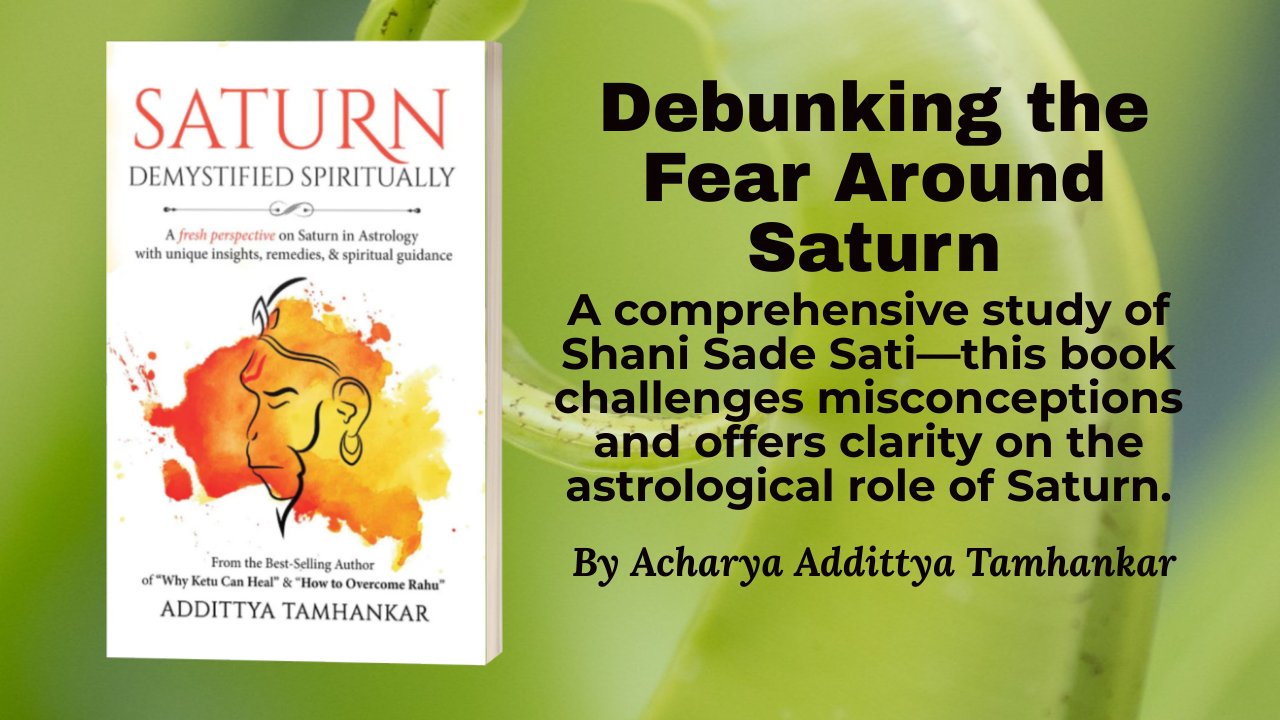
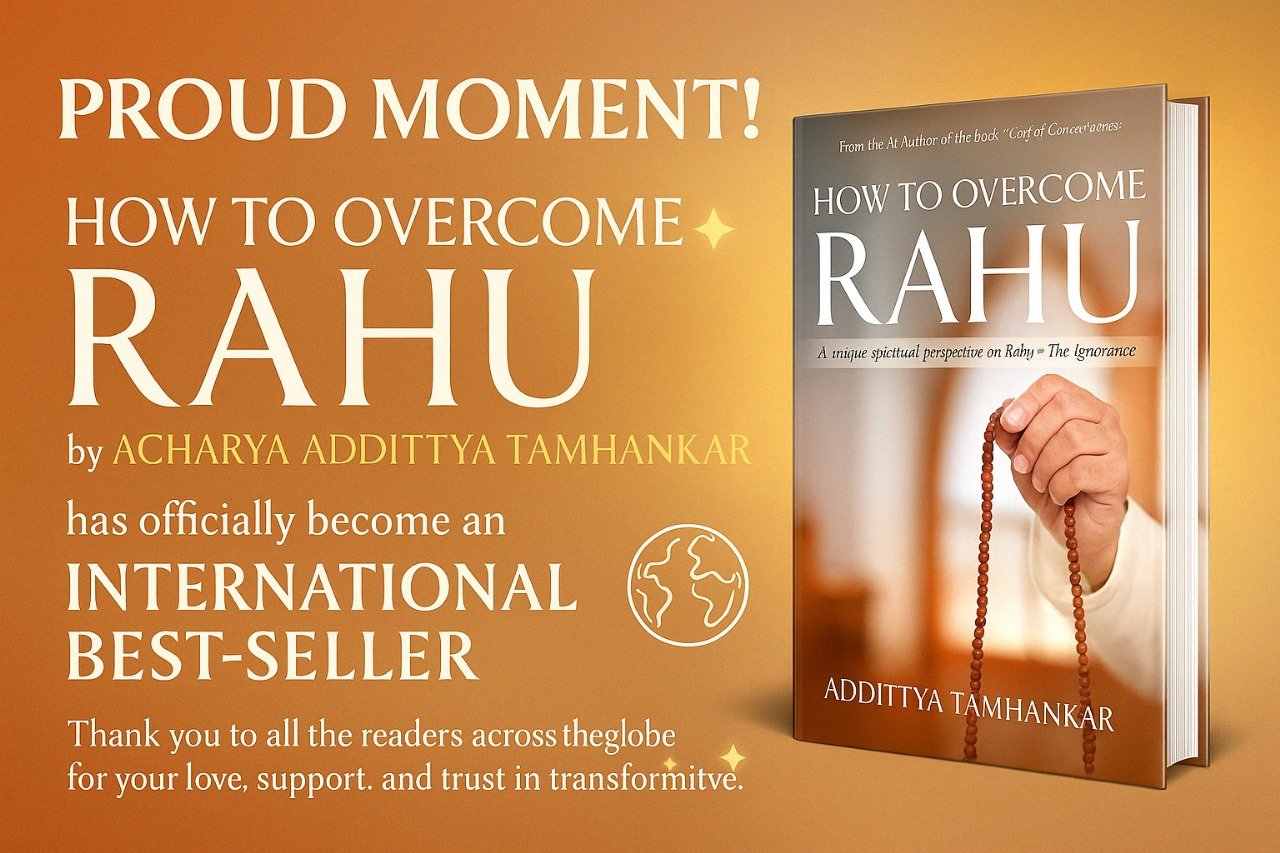
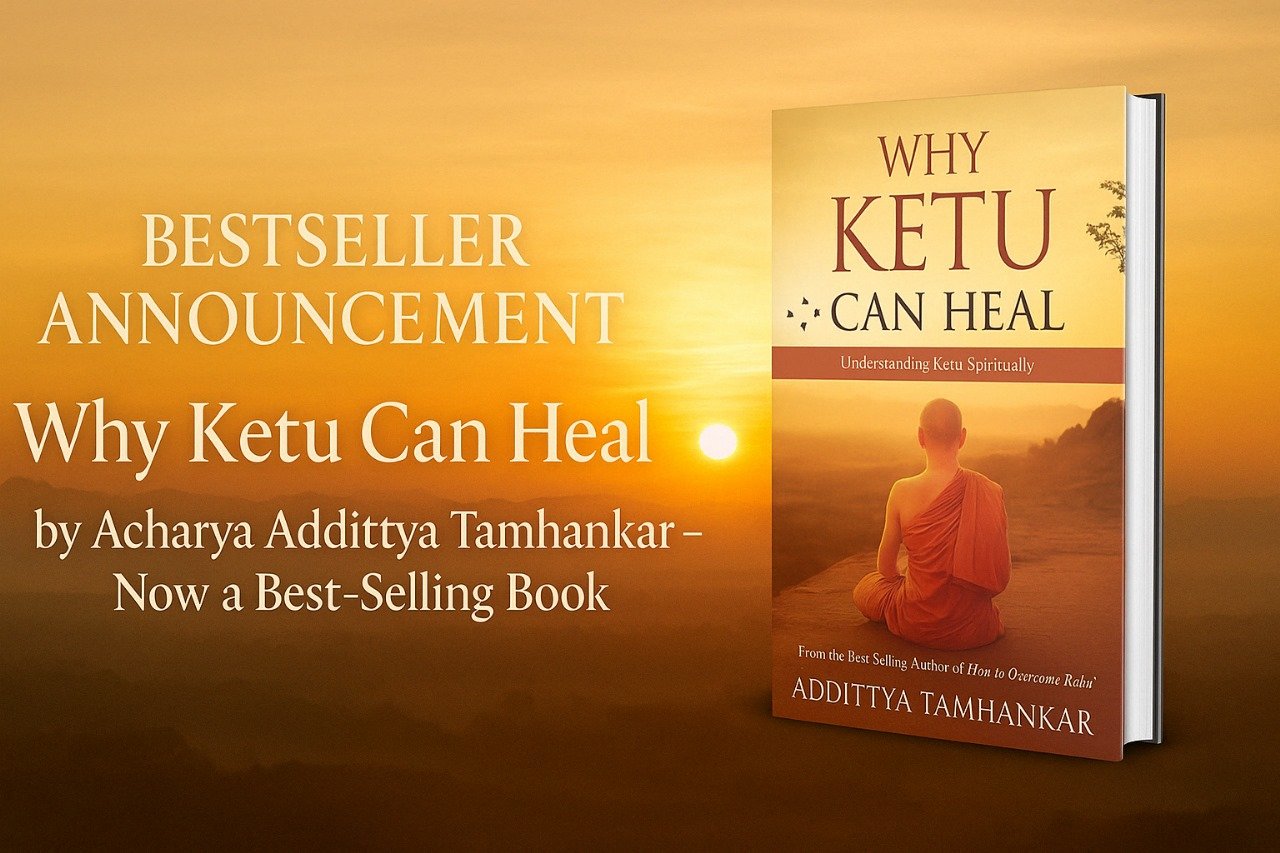
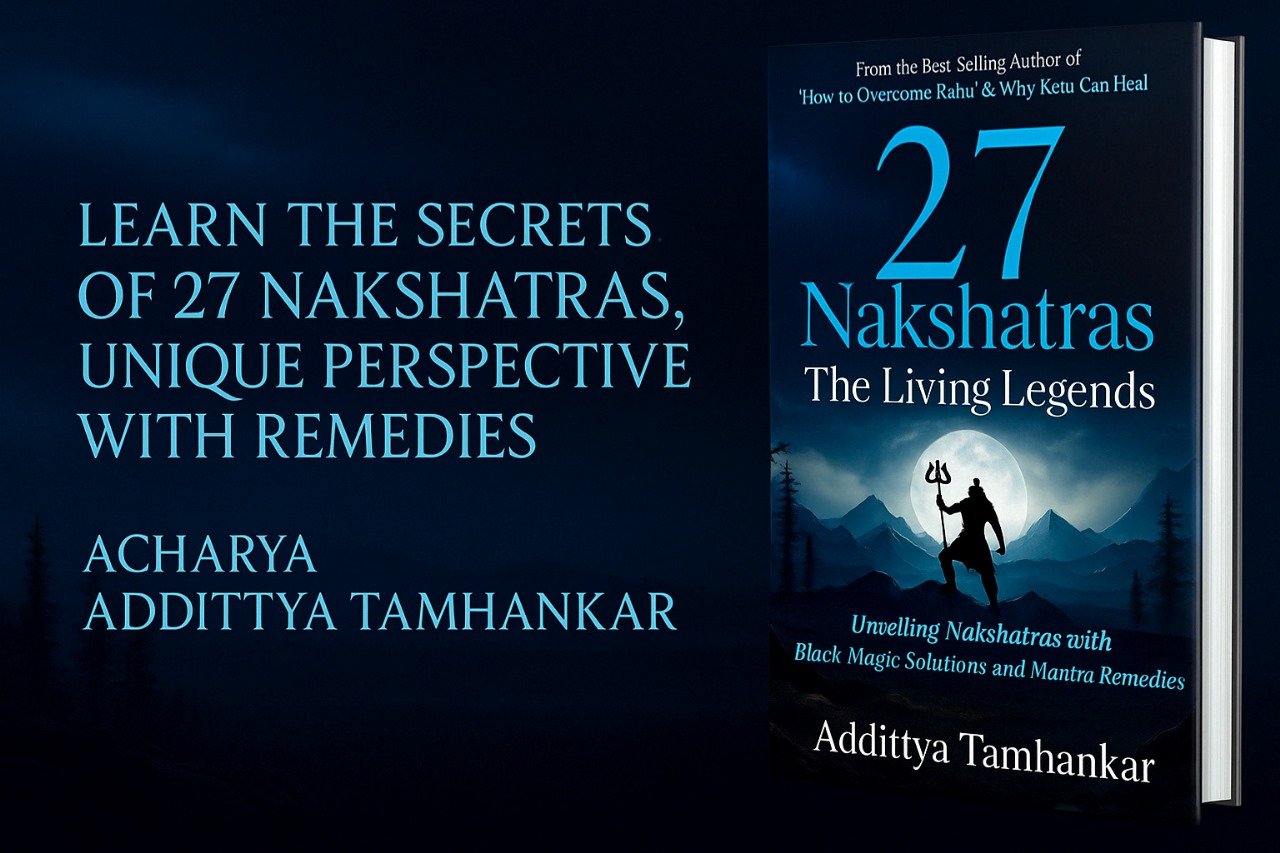
A bestselling author of 13+ books and recipient of multiple national honors, his contributions to astrology and spiritual awareness have been featured in reputed publications and recognized on prestigious platforms. Through his writings, consultations, podcasts, and teachings, he continues to inspire people to understand their karmic patterns, make wiser decisions, and move through life with greater clarity, strength, and confidence.